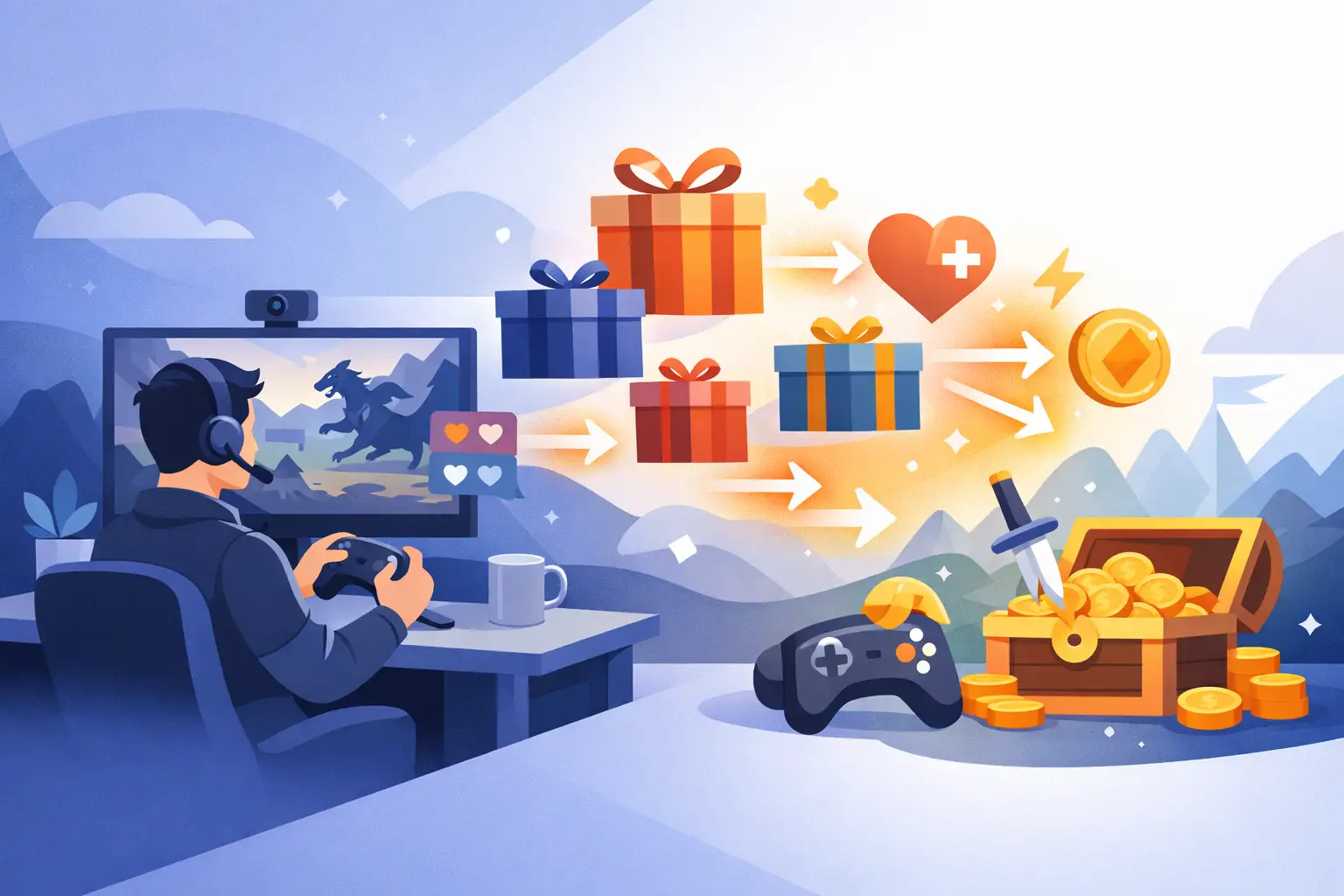
The second a gift hits your live and something on screen reacts, the room changes. People stop watching passively and start testing what they can trigger next. That is why more creators want to connect viewer gifts to gameplay - not as a gimmick, but as a real way to turn attention into action, momentum, and repeat gifting.
For TikTok LIVE creators, this matters because the usual format burns out fast. You talk, react, thank gifters, maybe run a challenge, and hope the chat stays warm. But when gifts directly affect the stream, viewers are no longer sitting on the sidelines. They can attack, defend, build, sabotage, boost a team, or shift the whole match in real time. That makes your live feel less like a broadcast and more like an event.
Why connect viewer gifts to gameplay at all?
Because gifts are already a language on live platforms. People use them to support you, show off, get noticed, or start mini rivalries in chat. Gameplay gives that language consequences. A rose is no longer just a pop-up. It becomes movement, pressure, chaos, progress, or a power play.
That shift does three big things at once. First, it gives viewers a reason to stay longer because they want to see what their gift caused. Second, it creates social pressure in the best possible way. Once one person triggers an effect, someone else wants to answer it. Third, it helps your stream avoid dead air. Even when conversation slows down, the game keeps the room alive.
There is also a business angle, and it is not subtle. Gift-driven interaction can raise gifting frequency because the result is visible and immediate. People are not just sending support into the void. They are buying impact. For creators and agencies, that difference matters.
What makes gift-to-gameplay mechanics work
The strongest setups are simple enough to understand instantly but chaotic enough to stay fun after twenty minutes. If viewers need a rulebook, you will lose them. If every gift does basically the same thing, they will get bored.
Good mechanics usually follow one of three patterns. The first is direct action, where a gift triggers a visible move or attack. The second is progress-based play, where gifts help a player, team, or object climb toward a goal. The third is conflict-based design, where viewers compete against each other or choose sides.
Conflict usually wins on live because rivalry creates story. People do not just want to trigger an animation. They want to beat the other side, save their favorite team, ruin somebody else’s run, or force the host to react under pressure. That is where repeat gifting starts to build naturally.
How to connect viewer gifts to gameplay without making your live messy
This is where a lot of creators get it wrong. They chase interactivity, then drown the stream in confusion. Too many triggers, too many rules, too much explaining. The room loses the plot.
A better approach is to start with one game loop and one clear promise. If viewers send gifts, what happens? Who wins? What changes on screen? Can someone understand it in ten seconds after entering the room? If the answer is yes, you are on the right track.
Then match the mechanic to your audience. If your room loves fast chaos, use reactive games where gifts instantly create movement and pressure. If your audience likes team pride and chat rivalry, use formats built around sides, score, and comeback moments. If your stream works best with visual progression, choose a format where viewers can clearly see growth, collapse, or advancement over time.
The admin side matters too. If setup feels like a side quest, creators stop using it. The best systems let you activate a game, control access, manage durations, and switch between experiences from one place. That is especially important for agencies and operators running more than one creator. You want the fun on screen, not backstage chaos.
Connect viewer gifts to gameplay with clear stakes
A gift-driven game only works when the outcome feels real inside the stream. Stakes do not have to be huge, but they do have to be visible.
If viewers are protecting a crop, climbing a platform, or pushing a team toward victory, they need immediate feedback. Progress bars, movement, attacks, collapse, wins, losses - these are not extra polish. They are the point. The viewer has to feel that their action landed.
This is also why pacing matters. If every gift creates too little impact, people stop caring. If every gift is so powerful that the game ends instantly, the room has no time to build tension. The sweet spot is enough effect to spark reaction, but enough resistance to keep the fight going.
That balance is what turns a stream into a loop. Someone gifts. The game reacts. Chat responds. Another person steps in. Rivalries form. The host leans into the chaos. Suddenly you are not begging for engagement. You are managing it.
The best formats for TikTok LIVE creators
Not every creator needs the same kind of interactive setup. That is where choosing the right format matters more than adding more features.
For high-energy entertainers, direct chaos tends to perform best. The room wants motion, pressure, and quick reactions. A gift comes in and the host instantly has something to respond to. That rhythm keeps the live hot.
For creators with strong communities, team-based competition is usually the smarter move. People love picking sides. Once viewers identify with a color, group, or lane, they start defending it. The stream becomes less about individual gifting and more about coordinated attack and loyalty.
For creators who want long-session retention, progression-based games have an edge. Viewers keep checking whether the objective survives, grows, or crashes. That gives the stream a visible arc instead of a flat sequence of thank-yous.
There is no universal winner here. It depends on your audience, your energy, and how you host. Some rooms want pure madness. Others want structured rivalry. The trick is not choosing the fanciest game. It is choosing the one your audience understands fast and wants to influence repeatedly.
What creators should avoid
The first mistake is overcomplicating the mechanic. If new viewers cannot tell what is happening, they will scroll. Live attention is brutal like that.
The second mistake is making the host explain too much. Your stream should not feel like tech support. The interaction should read visually, with just enough voiceover to hype it up and keep pressure on the room.
The third mistake is using a format that does not match your on-camera style. If you are naturally competitive, lean into rivalry. If you are chaotic and comedic, use games that create surprise. If your style is calmer, choose a format with visible progression instead of constant disruption.
The fourth mistake is ignoring operations. This sounds less exciting, but it matters. If you manage multiple creators, you need access control, product availability, and duration management handled cleanly. The show can be wild. The system behind it should not be.
Why this works better than static engagement tricks
A lot of creators still rely on the same tired moves - generic goals, repetitive gift requests, or vague promises that something fun will happen later. The problem is that those tactics ask viewers to imagine the payoff.
Gameplay shows the payoff instantly.
That changes viewer psychology. Instead of asking, "Will my gift matter?" they start asking, "What happens if I send this now?" That is a much stronger question because it pulls people toward action. It also creates a better on-stream story. Viewers are not just helping a number go up. They are changing the scene.
For creator teams and agencies, this is where one controlled system can make a real difference. If you can roll out interactive games quickly, assign access, and keep creators focused on performance instead of setup, you get a stronger live operation overall. That is part of why tools built specifically for TikTok LIVE mechanics tend to outperform generic engagement add-ons. They are designed for speed, gifting behavior, and public reaction.
One mention is enough here: StreamLive leans into this with a control center and a focused set of interactive products built around rivalry, instant reaction, and easy management. That combination matters because creators need excitement on screen and control behind the scenes.
The real opportunity is not just to make your live look busier. It is to give viewers a reason to interfere, compete, and come back for another round. When gifts cause gameplay, your audience stops being an audience. They become part of the match. And that is when the stream starts fighting for attention on its own.